
The Socotra Archipelago is definitely a magical realm, with diverse natural wonders. And Socotra Island is a well-known UNESCO World Heritage Site in Yemen. Of all plants of Socotra island, the desert rose definitely belongs to an indispensable flora. With a thick trunk shaped like a bottle, this endemic plant in Socotra is also named the bottle tree. This distinctive trunk aims to retain water for itself to survive in arid and drought climates. In this post, we will take you close to this wonder of Socotra.
Praised as a biodiversity hotspot, Socotra is the most alien-looking on Earth, attracting numerous adventurers and photographers around the world to catch a glimpse of its uniqueness. You will gain more surprises in this land of mystery. Pack up and be ready for your Socotra adventure tours!
Table of Contents
What Is the Socotra Desert Rose?
How does Socotra Desert Rose Tree Thrive?
Socotra Desert Rose Facts
How to Visit Desert Rose Socotra
Beyond the Desert Tree: Other Marvels in Socotra
FAQs about Socotra Desert Rose Tree
What Is the Socotra Desert Rose?
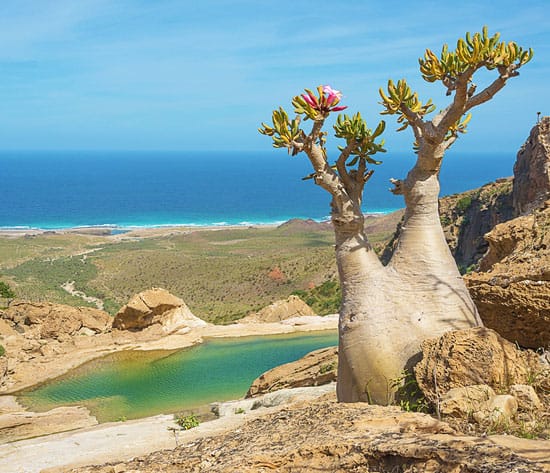
Socotra Desert Rose, also known as Adenium obesum socotranum. With a unique thick trunk, it is also called the Socotra Bottle Tree. The bottle-shaped trunk is used to store water to survive in harsh and arid areas, producing pink and red flowers. Its bark is as smooth as an elephant’s skin, helping it to reflect the light. The distinctive appearance and vibrant flowers turn it into a unique flora on Socotra Island.
This endemic native is scattered across Socotra and is incredibly resilient to the dry and warm conditions, with intense sunlight. And they are adept at seeking hidden water sources through their deep-growing roots. Socotra Desert Rose grows quite slowly, growing about 12 inches every year.
How does Socotra Desert Rose Tree Thrive?
Bottle tree in Socotra thrives in a desert setting and is extremely adaptable to the drought and arid climate of its native habitat. It tends to use the smooth and pale surface to reduce water loss and cope with intense heat, and secretes the poisonous sap to avoid being eaten. The trumpet-like trunk serves as a reservoir to store water. It maintains lush green leaves in normal times and goes dormant from late fall to winter, with leaves dropping, to retain moisture.
Socotra Desert Rose Facts
An iconic symbol of Socotra Island of Yemen
A giant bottle-like trunk to store water
Grow slowly, taking a year to grow 12 inches
Long-lasting blossom, lasting 2 months
Toxic sap protects itself from animal eating.
Dormancy in late fall and winter until the warm spring comes back
A vulnerable existence due to climate change and invasive species
How to Visit Desert Rose Socotra
Best Time to Visit
The best time to visit Socotra Island is the period from October to April, which is the peak season and offers the optimal weather for travelling. The period is also the time for the rose of the desert to embrace its full blossom from February to April, especially in mid-March. If coming during these months, you will encounter its vibrant pink blooms!
Best Places to See Bottle Trees on Socotra
You will find abundant blooming Desert Roses in Homhil Protected Area, Diksam Plateau, and Moumi Plateau, where you can also find the Dragon Blood Trees. In Homhil Protected Area, you can not only soak in the stunning landscapes of Desert Roses, but also swim in the fresh water of the natural infinity pool. Diksam Plateau offers you sweeping views of the plateau, which is also a famous spot to see Desert Roses and iconic Dragon Blood Trees. Moumi Plateau is a well-known location to view the bottle trees, the sea of pink flowers, as well as the surrounding gorges and red cliffs. You can even find the cucumber trees growing on the rock.
How to Get to Socotra Island
There are 2 common and practical ways to get to Socotra Island. The first one is the flight departing from Cairo on a connecting flight to Aden. In addition, the non-stop direct flight from Abu Dhabi is another way to reach the destination, which only operates twice a week, and you need to book through a licensed Socotra travel agency.
Be sure to prepare yourself for the Yemen visa. Arrange your logistics, like transfer, guides, camping arrangements, and accommodation. Or you can choose Hi Five Trip, we’d love to deal with your tourist visa and solve some logistics problems. And our professional assistance will save you a lot of hassles.
Beyond the Desert Tree: Other Marvels in Socotra
Dragon Blood Tree
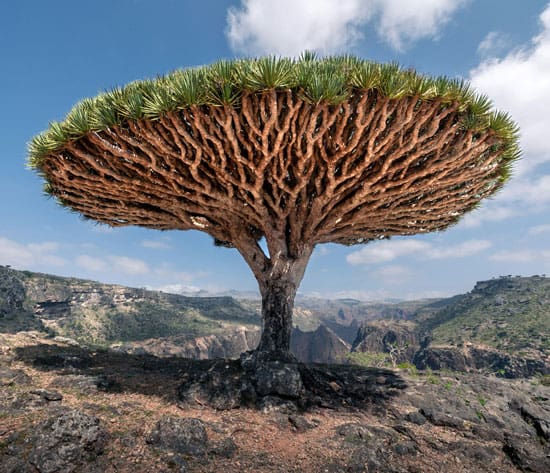
Recognized as the national tree of Socotra Yemen, the dragon blood tree is definitely an evergreen native. Its blood-like sap is the main reason why it got the name, which is constantly used as a dye and traditional medicine. The tree adapts to using the upturned umbrella-like canopy to store water to survive in arid and drought regions. Boasting a living fossil, a dragon blood tree can live up to 600 years, but it grows extremely slowly, taking 10-15 years to grow a meter.
Detwah Lagoon
Detwah Lagoon is designated as a UNESCO biosphere reserve, a home to diverse migratory species, such as gulls, terns, phalaropes, and storm petrels. It is definitely a paradise for birdwatchers. A variety of untouched natural spots, composed of turquoise water and white-sand beach, ensures you fully soak in the picturesque view and cozy vibe. If you are seeking a tranquil trip, Detwah Lagoon is a must-see in your Socotra your. And its clear and shallow water is quite friendly for freshmen to experience diverse water sports.
Shoab Beach
Dive into the glaucous water of Shoab Beach, also featuring the white sand and turquoise water. Its water is so clear that you can directly see the seafloor, which is perfect for beginners to snorkel. Pack up your gear and dive into the underwater world! On the way to Shoab Beach from Qalansiya, if you're lucky enough, you’ll catch a glimpse of a bunch of dolphins in the waves. It is definitely a paradise for photographers. Mesmerize in this natural masterpiece, and capture its unspoiled beauty of pristine white sand, azure water, and stunning scenery.
Archer Beach
Archer Beach is one of the must-see beaches on this island and one of the most beautiful beaches in the world. With endless white sand lined with turquoise water, the beach offers you a perfect spot to enjoy the incredible scenes of the sunrise and sunset. Just climb up to a dune and catch the impressive moments!
Hoq Cave
Not far away from Archer Beach lies the Hoq Cave, also known as Hawk Cave. The cave stretches about 3 or 4 km, featuring the incredible stalactites. It is cool and humid inside, but there is little water on the ground, except for a few patches of water at the end of the cave. You will gain a panorama of the adjacent landscape and seascape from the peak of the hill.
As the journey from Terbak Village to Hoq Cave tends to be a long and challenging journey, you are advised to set off in the early morning, with the assistance of a local tour guide. And do not forget to bring a flashlight and bottles of water to embark on your adventure.
Homhil
Homhil is virtually the Homhil Protected Area, featuring the desert rose, dragon blood trees, and the infinity pool. In this infinity pool, you can not only swim, but also gain the unparalleled view of the valley. Known as one of the largest forests of dragon blood trees, it can be the best place for nature lovers to enjoy a wonderful exploration on Socotra Island. In addition, it also has diverse kinds of natural wonders, including frankincense and bottle trees, and cucumber trees.
FAQs about Socotra Desert Rose Tree
1. Is desert rose toxic to humans?
Though the Socotra desert rose is beautiful, all parts of the desert rose plant are toxic. As it has poisonous sap containing cardiac glycosides, if ingested, it will cause slow heartbeat, vomiting, low blood pressure, and dizziness, and other symptoms. And if your hands touch the sap, wash your hands with soap and clean water in time.
2. How do the desert rose trees survive?
Desert rose trees are adept at growing in harsh and dry environments and storing water through their thick roots to get through periods without watering or rainfall. Sunny weather is the key to survival. When thriving in intense heat and sunlight, it utilizes the draining soil to nourish itself. With leaves dropping and minimal water requirements, it goes dormant period when winter comes.
3. Can desert rose trees grow anywhere?
Desert rose trees grow exclusively in an environment full of well-drained soil, sun, and warmth. Hot and arid conditions are perfect for their thriving, especially in tropical regions.
4. How fast do desert roses grow?
Desert rose grows as slowly as Dragon Blood Tree, growing about 30 cm (12 inches) per year.
5. Can I grow a desert rose?
Of course, you can grow an adenium obesum. It is a kind of easy-growing houseplant as long as you create an ideal environment for it, with 6 hours of direct sunlight and well-draining soil.
Plan Your Trip to Socotra Island with Hi Five Trip
For a nature lover or adventurer, Socotra Island is definitely a mecca. Aside from the Socotra desert rose, more natural wonders are waiting for your exploration! Step into the alien-like mystery land and feel its pristine beauty. Following the Socotra island tour packages will inspire you:
Or if you tend to enjoy a unique personalized trip to Socotra, do not hesitate to contact us. We’d love to assist you in planning your tailor-made tour with 1-1 service.


Have a Question?
You might see your comment appear on this page, but your email address and full name will not be published. Your personal information will remain confidential. Our Asia travel experts will get back to you as soon as possible. Required fields are marked *