
Beijing Summer Palace (Yiheyuan in Chinese) is the largest and best-preserved imperial garden in China as well as a masterpiece of classic Chinese garden design. Located in the Haidian District, northwest of Beijing, the Summer Palace is only 15 kilometers (about 9.3 miles) away from the city center. It's also very close to another imperil garden, the Old Summer Palace, which is 3 kilometers (about 2 miles) away.
Once the summer residence for the royal families of the Qing Dynasty (1644–1911), the Summer Palace is one of the must-visit attractions in Beijing. It's also a national treasure in China, reflecting the superb skills of ancient Chinese architecture and aesthetics. Due to its outstanding landscape garden design, the Summer Palace was listed as a UNESCO World Heritage Site in 1998.
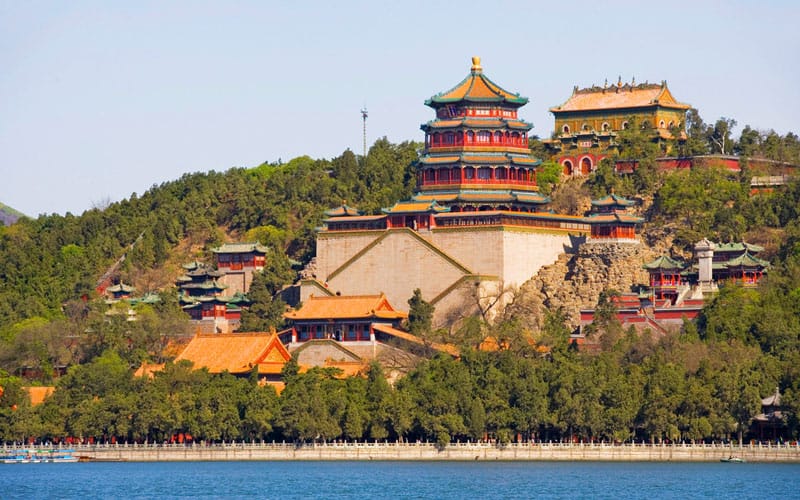
Table of Contents
Summer Palace Facts
Chinese name: 颐和园 (yí hé yuán)
Location: 19 Xinjian Gongmen Road, Haidian District, Beijing
Size: 3.009 square kilometers (about 300 hectares)
Opening hours: 6:00-20:00 from April to October; 6:30-19:00 from November to March
Entrance ticket: 30 RMB (about 4 USD)
Time needed: 3-7 hours, depending on travel route and pace
Best time to visit: summer & autumn
Why Visit Summer Palace
The Summer Palace is one of the most popular spots in Beijing. Need proof? Here we provide you with 4 major reasons, including its historical significance, cultural value, natural landscape, and architectural feature.
1. The Best Preserved Imperial Garden in the World
Summer Palace is the best preserved imperial garden in China. And Royal families used to spend their summer in the palace. As an outstanding representative of Chinese gardens, it’s also the best place where visitors can deeply understand ancient Chinese garden and royal life.
2. UNESCO World Heritage Site
The Summer Palace was added to UNESCO’s World Heritage List in 1998. Evaluated the magnificent representative of Chinese landscape gardens, it harmoniously integrates artificial art and nature. Blue waves, green trees, exquisite pavilions and bridges in the garden form a beautiful picture.
3. The Best Design of Classical Chinese Gardens
The Summer Palace takes mountain and water as its core. Of all spots, Kunming Lake and Longevity Hill typically reflect Surrounded by Mountains and Water, a traditional pattern of Chinese garden.
4. The World's Longest Covered Wooden Corridor
The Long Corridor is 728 meters (0.45 miles) long, which is the longest and the most distinctive gallery. It not only plays an important role in transport connection, but also provides visitors with space for comers’ viewing and resting.
Summer Palace History
Beijing Summer Palace is also named as Qingyi Garden, combined the essence of southern gardens and the magnificence of northern architectures. There are many exquisite buildings inside. In addition to the great scenery, it carries profound historical and cultural significance, which has witness hundreds of years of fluctuating historic and cultural circumstances.
1. Constructed in 1750
In 1750, to celebrate his mother's 60th birthday, Emperor Qianlong ordered the construction of a large imperial garden in the western suburbs of Beijing. Formally known as Qingyi Garden (Clear Ripples Garden), it was the precursor of Summer Palace. The construction of the Qingyi Garden was nearly completed in 1764.
2. Burned in 1860
In 1860, the Qingyi Garden was destroyed for the first time. During the Second Opium War (1856), British and French troops captured Beijing, who burned down and sack the Old Summer Palace and near-by royal gardens. The Qingyi Garden suffered serious damage and was abandoned, lying in ruins.
3. Rebuilt in 1886-1895
In 1886, to celebrate her 50th birthday, the Empress Dowager Cixi determined to rebuild the Qingyi Garden and changed its name to Summer Palace. Funding for reconstruction was diverted from military spending, which originally was used for the Beiyang Navy. In 1888, the reconstruction of the Summer Palace was almost done. And the Empress Dowager Cixi officially used it for summer retreat and dealing with offical affairs.
In 1894, to celebrate her 60th birthday, Empress Dowager Cixi turned the Summer Palace into a place to celebrate, for which part of the building was constructed. In the same year, it was also the year of the outbreak of the Sino-Japanese War (1894-1895). The Qing Dynasty Government was defeated due to lacking naval forces. Outsiders believed that the diversion of the military expenditure mainly contributed to the defeat.
4. Destroyed Again in 1900-1902
In 1900, the Summer Palace was destroyed again. The Eight-Nation Alliance invaded Beijing. And the Empress Dowager Cixi fled to Xi'an with Emperor Guangxu. The Summer Palace was destroyed again but not widely damaged. In 1902, Empress Dowager Cixi returned to Beijing and repaired part of the Summer Palace, where she continually spent the summer and managed government affairs until she died.
5. Open to the Public in 1914
In 1912, the Qing Dynasty came to the end. And the Summer Palace became the private property of the former royal family. The Summer Palace was opened to the public after two years. In 1924, the Beijing municipal government took over the administration of Beijing Summer Palace and turned it into a park open to the public.
What to See in Summer Palace
There are many famous attractions in the Summer Palace, including the Long Corridor, the Pavilion of Buddhist Incense, Suzhou Street, Kunming Lake, etc. Each has its own unique story to be savored. No matter what you are interested in, history, architecture, natural scenery or culture, Beijing Summer Palace definitely is a place you can't miss.
1. Longevity Hill
The Longevity Hill in Beijing Summer Palace is a renowned scenic spot, which features a variety of buildings. The most striking one of it belongs to Pavilion of Buddhist Incense, which is the highest and largest grand architecture in the garden. The combination of the hill and its surrounding scenery creates a charming picture, drawing countless visitors to appreciate.
2. Pavilion of Buddhist Incense
The Pavilion of Buddhist Incense is regarded as a significant building in Beijing Summer Palace. Located on the Longevity Hill, it has magnificent architecture, representing the high level of religious architecture and arts and crafts in ancient China.
3. Kunming Lake
This large artificial lake covers about 2.2 kilometers (0.85 miles), which is the major feature of Summer Palace Beijing. Explorers can take boats riding on the lake to enjoy the view of garden and architecture. The South Lake Island is reachable by this lake.
4. Long Corridor
The Long Corridor (Chang Lang) was built during the Emperor Qianlong period (1750). And it was rebuilt during the Emperor Guangxu period (1886) because of damage. Starting from Inviting the Moon Gate to Shizhang Pavilion, its length is 728 meters with 273 sections. Of all classical corridors in gardens of China, the Long Corridor belongs to the longest one. More than 8,000 colorful paintings on the beams, depicting stories about Chinese classical novels, folktales, animals and plants.
5. Suzhou Street
Mirroring the traditional Chinese water town, the Suzhou Street, also called Merchants Street, features shops and markets, where emperors and empresses could pretend to go shopping just like normal people. More than 60 businesses exist including tea house, restaurant, pharmacy, jewelry store, grocery store etc., presenting an epitome of the commercialization of towns in Southern China in the 18th century.
6. Summer Palace Museum
The Summer Palace Museum is located within the Summer Palace. It has a rich collection of cultural relics and artworks as ancient calligraphy, paintings and handicrafts etc.. These exhibits reveal the history and culture during the imperial era, allowing visitors to deeply understand the past brilliant achievements.
7. Marble Boat
The Marble Boat in Summer Palace was built in 1750. Emperor Qianlong designed it from the idea. The water that bears the boat is the same that swallows it up. It was originally a two-story Chinese-style building with a solid foundation. After being destroyed in 1860, it was rebuilt into a building with European style by Empress Dowager Cixi.
8. Hall of Benevolence and Longevity
The Hall of Benevolence and Longevity in Summer Palace was a place, where Empress Dowager Cixi handled with official affairs. It features splendid architecture and elegant decoration, with rich cultural and historical significance.
Summer Palace Layout
Beijing Summer Palace was built in 1750, also named as Qingyi Garden. The Summer Palace covers an area of about 290 hectares, of which about three-quarter is the water area. And there are lots of palaces, gardens and natural landscapes inside. The major tourist attractions are divided into three parts, including the Palace Area, the Scenic Area of the Front Hill and the Front Lake and the Scenic Area of the Back Lake and the Back Hill.
1. The Palace Area: The Palace Area is 0.96 square kilometers (0.37miles) , covering about 0.33% of the total land area of the garden. Represented by the Hall of Benevolence and Longevity, the Palace Area includes the Hall of Diligent Governance and the Second Palace Gate etc.. Those are the main places for the Empress Dowager Cixi and the Emperor Guangxu to take part in domestic and foreign politics in the late Qing Dynasty.
2. The Scenic Area of the Front Hill and the Front Lake: This part, also the main body of the Summer Palace, covers an area of 255 kilometers (about 158 miles), accounting for 88% of the land. The southern slope of Longevity Hill is about 1,000 meters long. The maximum depth reaches 120 meters from north to south. The top of the mountain reaches up to over 60 meters. The Kunming Lake reaches 1,930 meters long from north to south, and it's 1,600 meters wide from east to west. There is a pier in the lake, three big islands and three small islands.
3. The Scenic Area of the Back Lake and the Back Hill: The Scenic Area of the Back Lake and the Back Hill mainly refers to the northern slope of Longevity Hill, which is the waterway between the Back Hill and the Beigong Wall, also known as the Houxi River. The Scenic Area of the Back Lake and the Back Hill covers an area of 24 hectares. That makes them 12% of the total land area of the park, of which 19.3 hectares are mountainous.
The terrain of the Back Hill is relatively slower than the Front Hill, with a maximum depth of 280 meters from north to south. There are two mountain streams, the East Peach Blossom Ditch and the West Peach Blossom Ditch. From the Half Wall Bridge in the west to the Harmonious Interest Garden in the east, the length of the Back Stream River is more than 1,000 meters. There is a Back Stream Shopping Street in Beijing Summer Palace, also known as Suzhou Street.
Travel Routes of Summer Palace
Route 1: East Palace Gate – Hall of Benevolence and Longevity – Garden of Virtue and Harmony – Hall of Jade Ripples – Yinyun Hall – Hall of Happiness and Longevity – Long Corridor – Cloud-Dispelling Gate – Marble Boat Route
Route 2: North Palace Gate – Suzhou Street – Central Axis Road – Gate Tower of Cloud Retaining Eaves – Marble Boat – Long Corridor – Cloud-Dispelling Gate – Hall of Joyful Longevity Route
Route 3: New Palace Gate – Bronze Ox – East Causeway – Wenchang Tower – Hall of Benevolence and Longevity – Garden of Virtue and Harmony – Hall of Jade Ripples – Long Corridor – Cloud-Dispelling Gate
Summer Palace Opening Hours
| Peak Season (April - October) | Off Season (November - March) |
|---|---|
| 06:00 - 20:00 | 06:30 - 19:00 |
Four gardens of the Summer Palace include Summer Palace Museum, Heart and Garden, Tower of Buddhist Incense of the Summer Palace and Suzhou Street opening hour as below: Peak Season ( April - October ) Off Season ( November- March )08:00 a.m. - 06:00 p.m. ( Beijing Time) 08:30 a.m. - 05:00 p.m. ( Beijing Time)
Tip:
These four gardens are closed on Monday except for public holidays in China.
Summer Palace Tickets Price
Summer Palace Entrance TicketsSummer Palace Through Tickets Peak Season 30 yuan/ ticket 60 yuan/ ticketOff Season 20 yuan/ ticket 50 yuan/ ticket
Tickets Price for Other Four Gardens in Summer Palace as below: Summer Palace Museum Heart and Garden Tower of Buddhist Incense of the Summer Palace Suzhou StreetTickets Price 20 yuan/ ticket 5 yuan/ ticket 10 yuan/ ticket 10 yuan/ ticket
Tips:
1. The through tickets include entrance tickets and tickets for other four gardens.
2. Discounted tickets are available for entrance tickets, through tickets and tickets for other four gardens. According to the rules of Summer Palace for discounted tickets, 15 yuan/ ticket is for discounted entrance tickets, 30 yuan/ticket for discounted through ticket and half of the price for other four gardens ticket.
Best Time to Visit Summer Palace
Summer and autumn are the most suitable seasons to visit Summer Palace especially summer, which is the peak travel season. It would be full of people and the weather is hot. But it's the right time, from June to August, for lotus to bloom. Tourists from home and broad can enjoy this excellent blossoms.
Autumn is good time to visit because it will offer the moderate weather. In winter, the lake will be frozen and the cruise is not available. Autumn is not so cold as in winter and not so hot as in summer. Nothing is better than fall scenery and cool breeze for taking photos and exploring the garden.
How to Get to Summer Palace
By Subway
1. Take subway line 4 in the north direction and get off at Beigongmen station. Then take Exit D and walk west for 3 minutes to North Palace Gate on your left side.
2. Take subway line 10 then transfer to the Western Suburban Line and get off at Yiheyuanximen Station. Then walk north for 4 minutes to the West Gate of Summer Palace.
By Bus
1. To the New Palace Gate: Take bus 74, 374 or 437, and get off at Xin Jian Gong Men Station.
2. To the the East Gate: Take bus 303 and get off at Yiheyuan Station, then walk for 200 meters (220 yards) to the East Gate.
3. To the North Gate: Buses via the North Gate of the Summer Palace. Buses 330, 331, 346, 375, 384, 393, 634, 716, 718, 737, 801, 808 or 834.
By Taxi
1. Taxi is faster than subway but not so affordable as the later. In Beijing, the base fare starts with 13 yuan (within 13 kilometers). It will cost you 2.3 yuan per kilometer after driving more than 3 kilometers.
2. It's recommended to book a taxi in advance during the rush hour. From 7 a.m. to 9 a.m. and from 5 p.m. to 7 p.m. are the rush period. You’d better take the traffic into consideration to avoid crowds or you may stuck in the traffic jam.
For Your Information:
1. Address of Summer Palace in English and Chinese: 19 Xinjian Gongmen Road, Haidian District, Beijing (北京市海淀区新建宫门路19号)
2. Three Major Gates of Summer Palace:
East Gate (Main Gate), also named East Palace Gate
North Gate, also named North Palace Gate
South Gate, also known as New Palace Gate
Summer Palace Travel Tips
1. Check for the Route: There are three main entrances to Summer Palace including East Palace Gate (the main gate), North Palace Gate and New Palace Gate (South Gate). Get to know which gate you want go in advance so that you could have a different tour route to visit the Summer Palace, when taking a taxi or bus.
2. Time for Visit: Most people tend to spend at least half a day to visit. There are so many must-see spots to enjoy such as gardens, buildings, and waterways.
3. Visit Early or Late: Take a visit early in the morning or later in the afternoon to avoid crowds, which is not so crowded so as to explore and enjoy a peaceful trip.
4. Things to Take: Bring some water and snacks just in case. Besides, a hat and sunglasses are recommended in summer for protection from ultraviolet rays. And comfortable shoes are dispensable and essential for travelling. At last, if you are a shutterbug, take your equipment to capture the great view.
Boat Service on Kunming Lake in Summer Palace
Ferry Services Operating Hours: 8:30 a.m, - 4:30 p.m.
Tickets for small boats end at 4:00 p.m.
Types of Boats: Rowboats, pedal boats, and electric boats
Piers for Small Boat: Bafang Pavilion Small Boat Pier: 4-seat rowboat (80 yuan/hour, 400 yuan deposit), 6-seat pedal boat (120 yuan/hour, 400 yuan deposit).
Wenchang Pavilion Electric Boat Pier: 6-seat electric boat (200 yuan/hour, 600 yuan deposit).
Yulan Hall Electric Boat Pier: 6-seat electric boat (200 yuan/hour, 600 yuan deposit).
Ferry Routes: 1. Cloud-Dispelling Gate to circle the lake : 40 yuan/person
2. Changguan Hall to South Lake Island: 40 yuan/person
3. Marble Boat to South Lake Island: 40 yuan/person
4. South Lake Island to Jingming Tower: 30 yuan/person
5. Bronze Ox to Stone Boat Pavilion : 40 yuan/person
6. South Ruyi Gate to South Lake Island: 30 yuan/person
7. Suzhou Street to Su Yun Yan: 30 yuan/person
8. Su Yun Yan to Seventeen-Arch Bridge: 40 yuan/person
Reminder: In the event of a wind force warning of level four or above, or other inclement weather, boat tours in the park will be suspended. It’s advised for visitors to follow the official Weibo account or carefully check for temporary announcements at the entrance and piers so making travel plans accordingly.
Official Tour Guide Services from Summer Palace
The tour guide services at the Summer Palace are divided into three kinds: electronic audio guides, mobile app guides, and guided tours by staff.
1. Electronic Audio Guides: Electronic Audio Guides are available at the East Palace Gate, North Palace Gate, North Ruyi Gate, New Palace Gate, and South Ruyi Gate (only for return). There are 19 languages to choose from audio explanations.
2. The Mobile App Guides: The mobile app guide can be found through “Summer Palace” official WeChat account. Visitors can get help from the “View Guide” or “Summer Palace Guide” features.
3. Tour Guides: Guided tour desks located at the East Palace Gate, North Palace Gate, and New Palace Gate areas, offer multilingual tour guides like Chinese, English and Russian etc. For tourists from all over the world.
Food and Beverage Services at Summer Palace
A wide selection of the catering options is available inside and near the palace, of which provides everything from fast food, tasty snacks to formal meals. The Tingli Pavilion inside Summer Palace is most famous as its imperial food.
The Tingli Pavilion (also named as Pavilion for Listening to the Orioles) was built during the Qian Long Period (1750) within the Summer Palace, which was originally for celebrating Emperor Qian Long’s mother’s birthday. Later, the Tingli Pavilion became a place, where Empress Dowager Cixi enjoy opera and music. It was also used for hosting foreign affairs.
Today, it is famous for tasty imperial cuisine based on recipes, continually innovating to suit modern tastes. Of a wide range of delicacies, imperial pastries involve more than 20 steps. While enjoying beautiful scenery, visitors could enjoy palatable imperial delicacies provided by Summer Palace.
Summer Palace FAQs
1. Is Forbidden City the same as Summer Palace?
No. The Forbidden City is the imperial palace of Ming and Qing dynasties, where the emperor live and work, located in the central axis of Beijing. The Summer Palace is the royal garden of Qing dynasty, located in the western suburbs of Beijing.
2. Is the Summer Palace in the Forbidden City?
No. The Forbidden City is 21 kilometers (13 miles) away from the Summer Palace. And the Summer Palace is located in the western suburbs of Beijing, which is 15 kilometers (9 miles) away from the city center.
3. What to do in Summer Palace Beijing?
There are so many historically traditional tourist attraction in the Summer Palace, such as the Long Corridor, the Marble Boat and 17-Hole Bridge. Visitors could also climb the Longevity Hill and row boats on the Kunming Lake.
4. What is so special about Summer Palace?
The Summer Palace is the world cultural heritage and one of representatives of imperial garden, which also reflects the marvelous workmanship of ancient Chinese garden.
5. How big is the Summer Palace?
The Summer Palace covers about 290 hectares of land, which equals about 360 football fields. The water area accounts for about three-quarters, and there are lots of palaces, gardens and natural landscapes inside.
6. When was the Summer Palace built?
Summer Palace was built in 1750 and completed in 1764.
7. Why was the Summer Palace built?
To celebrate his mother’s sixtieth birthday, the Emperor Qian Long ordered the construction of the Summer Palace.
8. Why was the Summer Palace destroyed?
To show their national strength, the Anglo-French armies destroyed the garden for the first time. And the Summer Palace was destroyed by the Eight-Nation Alliance of European nations for the second time.
Attractions Nearby
Enrich your Beijing experience by visiting attractions nearby, such as the Old Summer Palace, Fragrance Hill Park, and Daguanyuan. These sites allow tourists get a deeper understanding of China's rich history and unique nature.
The Old Summer Palace in Beijing
The Old Summer Palace is one of the most famous imperial gardens in Qing Dynasty, which is also known as The Garden of Gardens. Located in the northwest suburbs of Beijing, adjacent to the Summer Palace, the Old Summer Palace is composed of the Old Summer Palace, the Changchun Garden and the Wanchun Garden. The royal family of Qing Dynasty would come here to deal with official affairs at the peak of summer, which is also the reason why it was called the Summer Palace.
Fragrance Hill Park
Located in the western suburbs of Beijing, the Fragrance Hill Park covers an area of 188 hectares, which is an imperial garden with characteristics of mountain forest. The main peak in the scenic area, the Xianglu Peak, is renowned as Daunting Heights due to its altitude of 575. Xiangshan Park was built in the 26th year of Jin Dading with a history of nearly 900 years. Xiangshan Park was rated as AAAA scenic spot by the National Tourism Administration in 2001.
Daguanyuan
Daguanyuan, also named as the Grand View Garden, is the villa built by Jiafu for Yuanchun in A Dream of Red Mansions. It is a treasure of garden art, created by the great writer Cao Xueqin. The design of the Grand View Garden has a profound impact on the garden construction in after times. In 1984, the Grand View Garden was built in Beijing as the set of the 1987 TV series. After the filming ended, the garden was opened to the public.
Plan Your Beijing Tour with Us
Not want to plan by yourself? Here are some of our best-selling Beijing tour itineraries including the Summer Palace:
5-Day Classic Beijing Tour
7-Day Luxury Beijing Tour
You can also explore more Beijing tour packages, or take advantage of the 30-day visa-free policy to extend your Beijing tour to other highlighted tourist destinations in China. Or, the simplest way, tailor make a Beijing tour schedule with our expertise.
Have a Question?
You might see your comment appear on this page, but your email address and full name will not be published. Your personal information will remain confidential. Our Asia travel experts will get back to you as soon as possible. Required fields are marked *